
For Professionals
Refer a young person to New Steps Independent Living Program
CFS caseworkers and agencies: refer young people 16 to 21 who are involved with CFS for independent living. Call 431-444-2114.
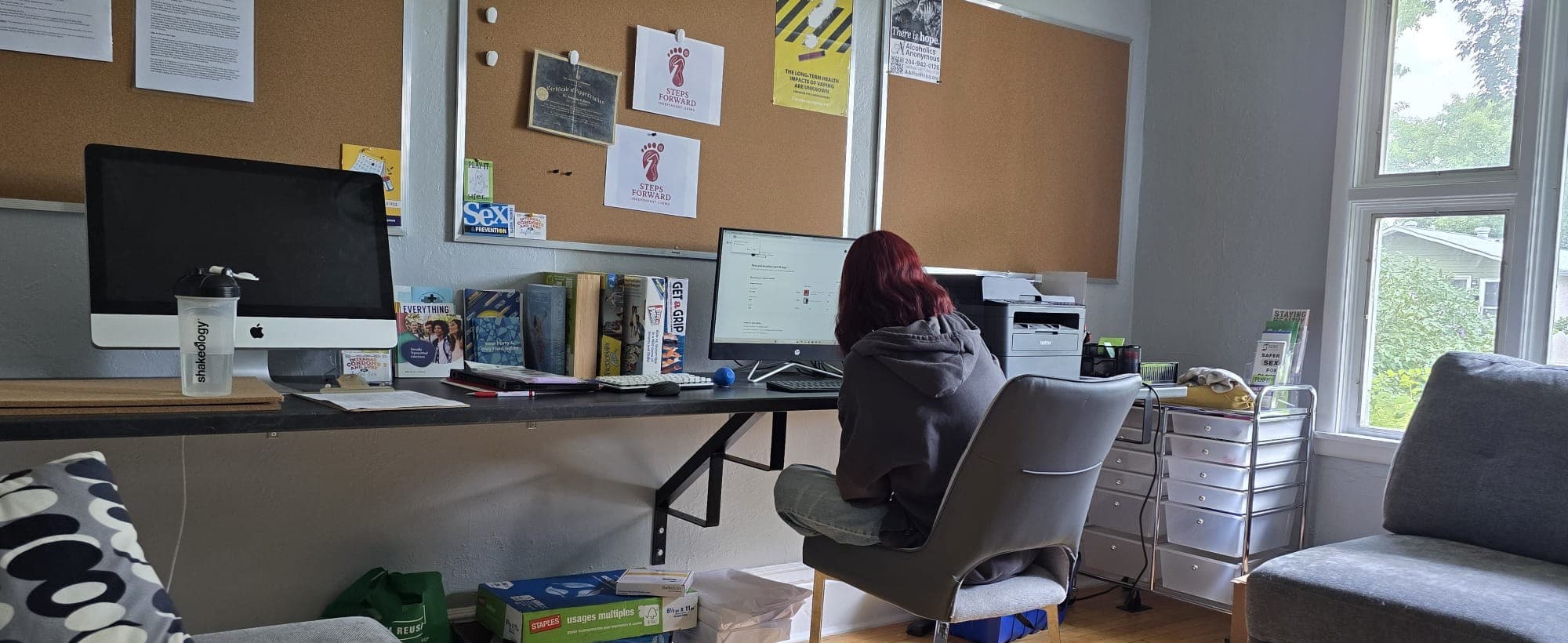
What you are referring to
One program: independent living for young people 16 to 21 leaving care, with 24/7 support.
Independent Living Program
Three-phase housing model with life skills training, cultural programming, and wraparound support for youth aging out of care.
Learn more →Referrals under an Agreement with Young Adults (AYA) or extension of care
Once a young person turns 18, the route that keeps agency support in place is an extension of care — the arrangement Manitoba agencies usually call an Agreement with Young Adults, or AYA. New Steps is built to be a program your agency can invest in under an AYA or extension of care.
AYA is a program label rather than statutory language. The authority sits in The Child and Family Services Act (C.C.S.M. c. C80), s. 50.1, “Support after age of majority”, which lets the director — or an agency with the director's written approval — continue care and maintenance for a young adult so they can make the transition to independence.
It is no longer permanent wards only
This is the part most reference material has not caught up with. The former s. 50(2) was repealed and replaced by s. 50.1, in force since June 1, 2026. Support after 18 is now available where any one of six arrangements applied on the day immediately before the young adult's 18th birthday:
- a kinship care agreement
- a customary care agreement
- a voluntary care agreement
- a voluntary surrender of guardianship agreement
- an agency was their temporary guardian
- an agency was their permanent guardian
If you are working from a checklist that says permanent wards only, it is out of date — and a young person you wrote off as ineligible may not be.
How long support lasts
Extensions of care and post-majority supports vary by agency and agreement, and some agencies support young adults into their mid-twenties. Check the agreement that applies to the young person when you plan a transition timeline.
The discretion itself belongs to the director and the agency. s. 50.1 confers nothing on New Steps and imposes no duty on us — we are not a decision-maker in your process. What we can do is be ready with a room, a program plan, and the documentation your approval needs.
For a plain-language version written for the young person rather than the worker, send them to our guide on extensions of care in Manitoba.
Statutory references verified 2026-07-30 against the official C.C.S.M. c. C80 consolidation and S.M. 2026, c. 29. This is a summary for referring professionals, not legal advice — confirm against the current consolidation before you rely on it.
How to make a referral
Anyone can reach out: young people themselves, caseworkers, family, or other services. To move in, a young person must be involved with CFS, because placements are funded and approved through their agency. The next step is a joint call with the young person and their worker.
You Reach Out
Send the referral form below or call 431-444-2114. Either way, the next step is a joint call with you and the young person about what they need. The form takes about 5 minutes.
We Give You a Tour
Come see the home, meet the team, and ask us anything. The young person is welcome to come along — it's their home we're talking about.
We Work It Out Together
We go through fit, supports, and what the move would actually look like. Collaborative, not a gatekeeping interview.
Move-In, When There's a Room
Placement depends on vacancy. When a room is open, a referral can come together as quickly as about a week.
How fast this can move — and what we are not
When there is a room open, a referral can go from your first call to move-in in about a week. When we're full, we'll say so rather than leave you waiting on us.
New Steps is not an emergency placement service. We don't take same-day or overnight placements — every placement goes through a tour and a conversation first. If a young person needs somewhere to be tonight, the 24/7 crisis lines on our Get Help page are the right call.
What to have ready
The form asks whether the young person is involved with CFS, their first name or initials and age, where they are living now, why you are referring, and your contact details. The items marked “for the call” are helpful to have for the joint call with you and the young person, where we go through them together. None of this blocks a first conversation.
Whether the young person is involved with CFS
The form's first question. A young person needs to be involved with CFS to move in, because placements are funded and approved through their agency.
Who you are
Your name, agency, role, and the phone number and email you actually answer. We call the worker back, not a general line.
The young person's basics
First name or initials, age, and where they are living right now — including if the honest answer is couch-surfing or unknown.
For the call: legal status and who holds guardianship
Permanent or temporary guardianship, kinship, customary, or voluntary care, or an agreement already in place after 18. This drives which supports the agency can fund, so it is the detail worth getting exactly right.
For the call: whether an AYA or extension of care applies
In place, in progress, or not yet raised. We plan differently for each.
For the call: case plan goals
School, work, identification, family contact, health. We build the module plan around what is already in the case plan rather than starting a parallel one.
For the call: health and accessibility needs the young person wants us to know about
Anything that shapes day-to-day support, including what has and has not worked in previous placements.
Consent
Confirmation that the young person knows about the referral and agrees to it. A placement nobody chose does not hold.
What your agency gets back
A referral is not the end of your file. Here is what comes back to you once a young person moves in.
- Regular written updates on how the young person is doing: what happened, what changed, what to watch, and anything you need to know before your next visit
- Concrete milestones written into those updates, such as identification documents obtained, bank accounts opened, benefits claimed, budgets built and certificates earned. They sit underneath the writing, never instead of it
- Notification of incidents and significant changes under our reporting obligations, on the timelines your agency requires
- A direct line to the staff who actually work with the young person — not a referral coordinator relaying messages
We write down what actually happened and stop there. A completed module is a completed module; we will not inflate it into a claimed change in someone's life, and you should be suspicious of any provider who does.
Start a referral
Fill out the form below and we'll respond within 2 business days. All information is kept confidential. Or call 431-444-2114.
What professionals can expect
- Response to referrals within 2 business days
- Clear communication about availability and waitlist status
- Collaborative intake process — we work with you, not around you
- Regular written progress updates to the caseworker and placing agency
- Warm, trauma-informed approach at every step
- Cultural programming being built with community partners now. Elders and Knowledge Keepers will lead the teachings; New Steps does not write or test them