
Our Program → Learning Centre
Skills for life, not just for school
Our Learning Centre in Winnipeg, Manitoba is where we teach practical skills for independence, from cooking and budgeting to high school equivalency (CAEC) prep, tutoring, and getting ready for work.
Our Facility
A space designed for growth
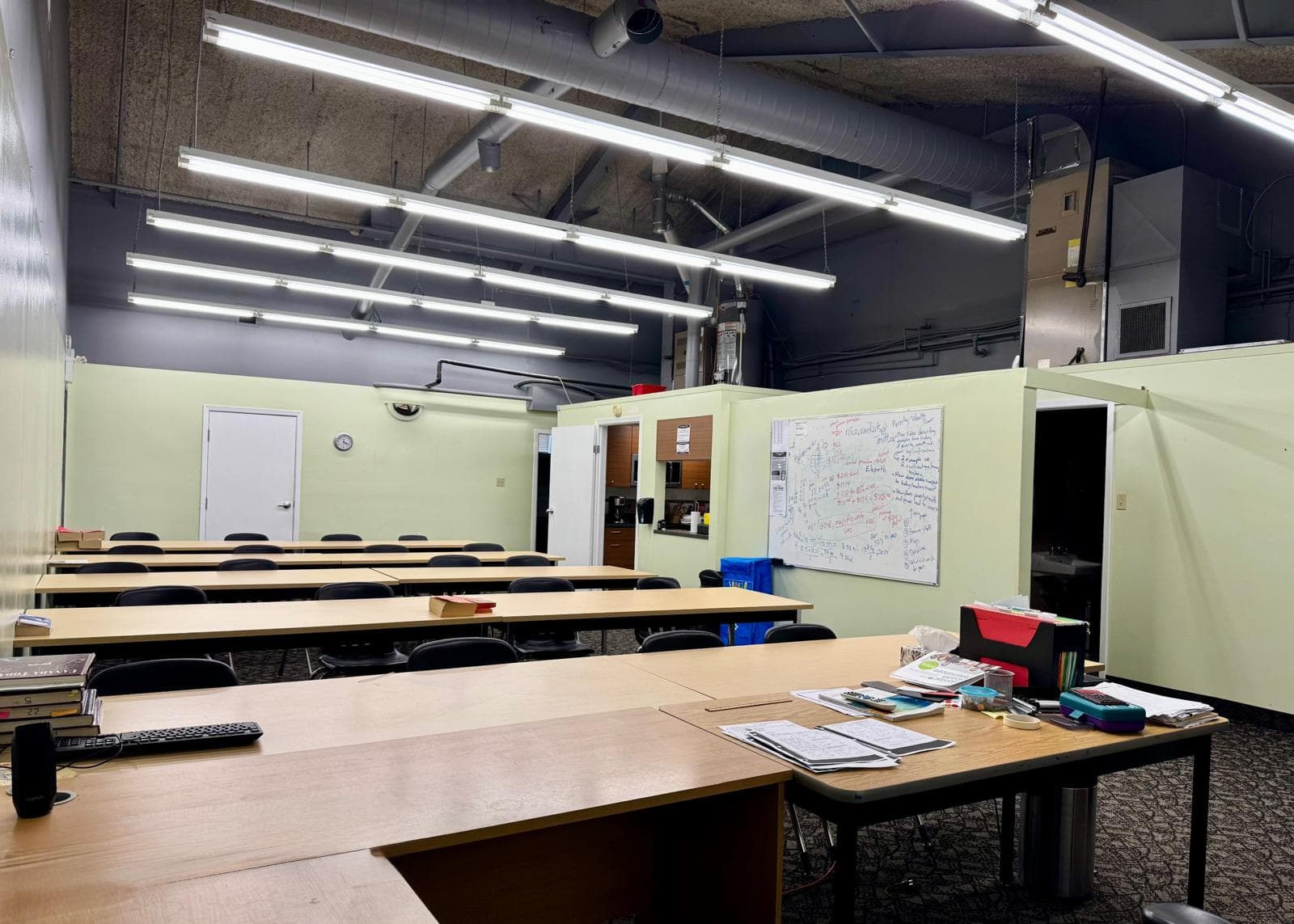
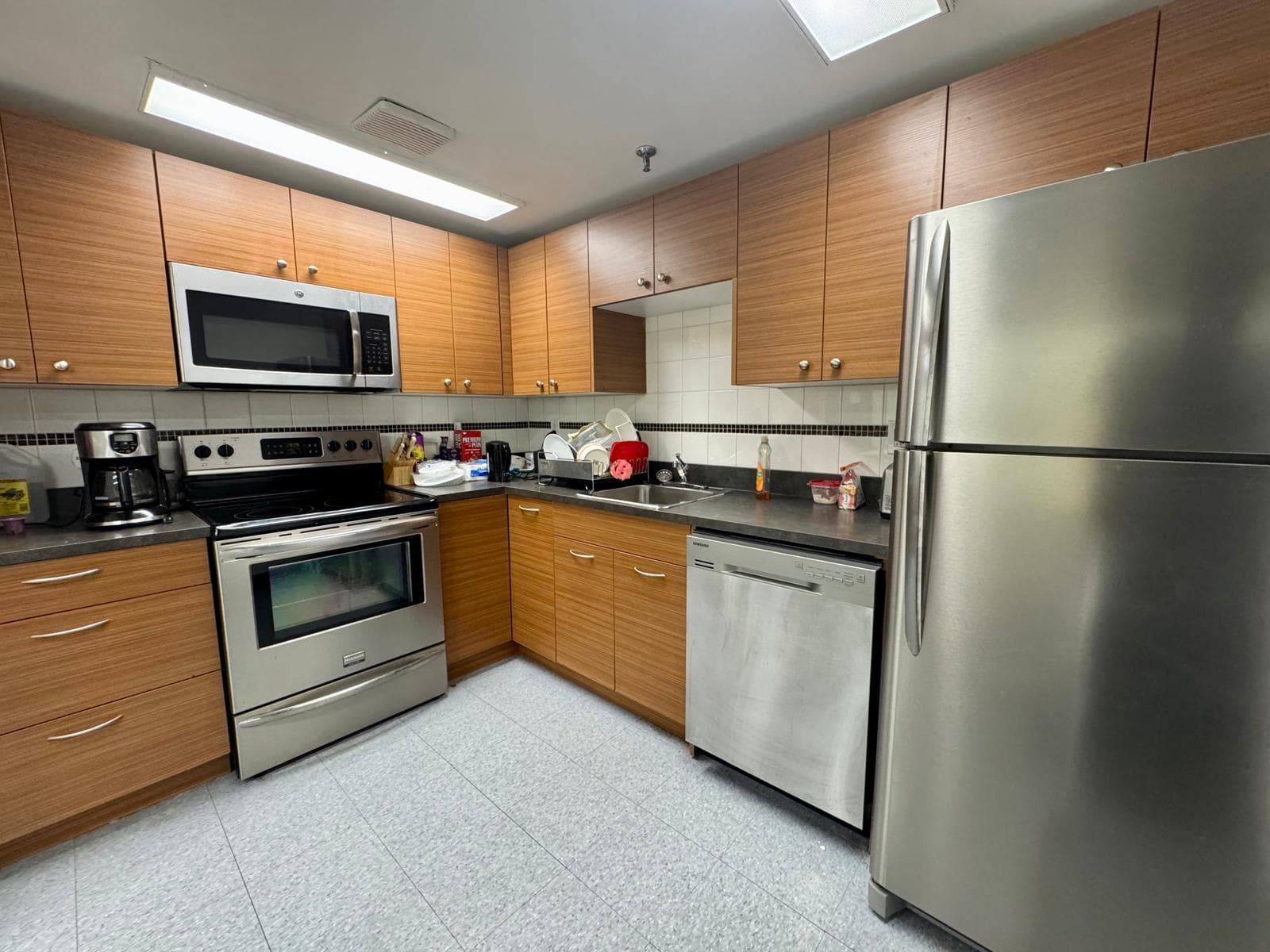
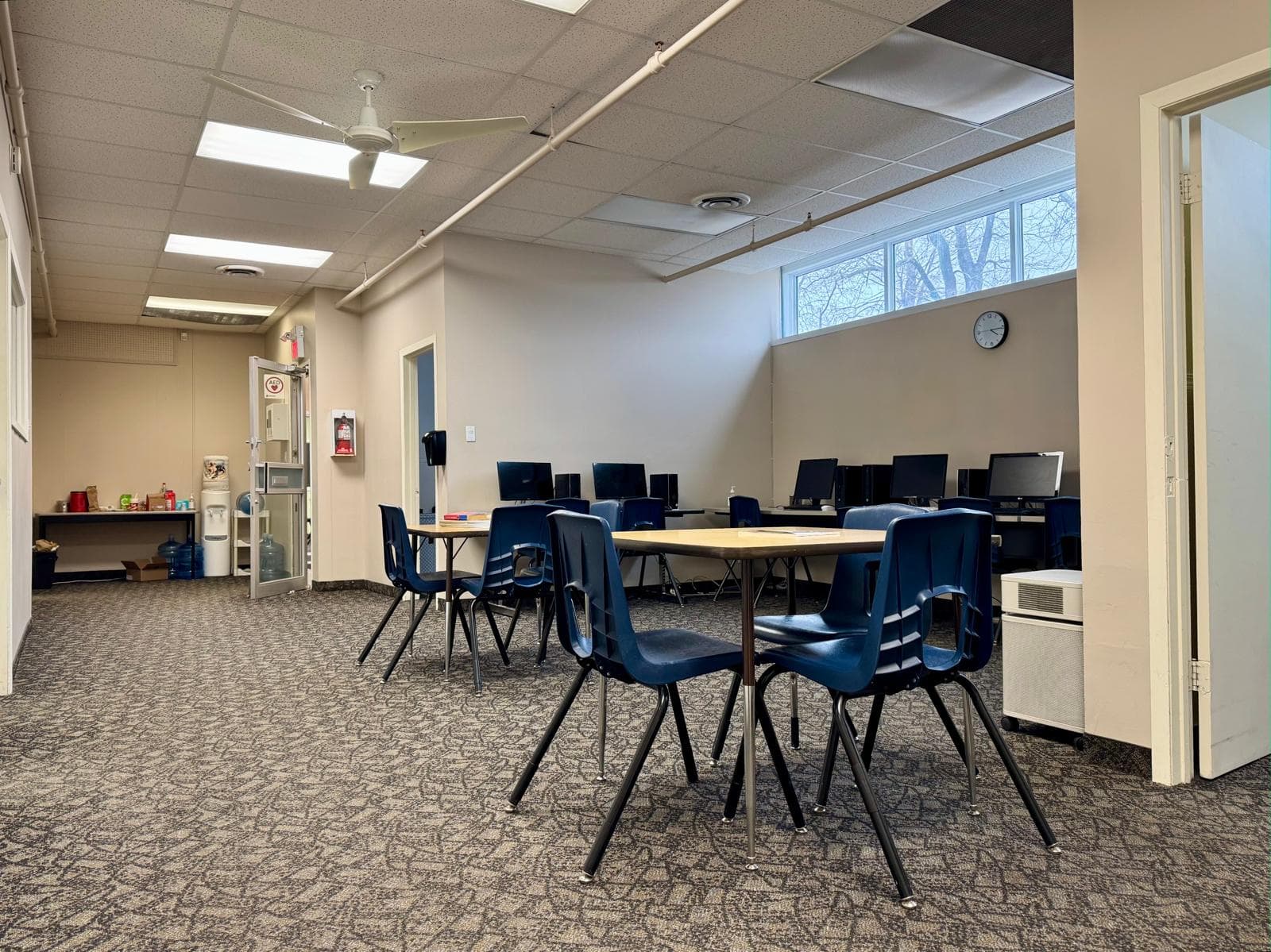
Our office at 431 Thames includes a learning space. We are still setting it up, so these photos show the space as it is today.
 Computers
 Kitchen
 Group room
 Meeting room
 Study area
 Entrance
What we are setting up each space for
The Learning Centre is in development. It is its own space rather than a corner of someone's home, and that matters. Going somewhere to learn something, with other people, on a schedule, is closer to how the rest of adult life works than being taught in your own living room.
Computers
For job applications, government and benefit portals, school work, and the everyday digital tasks of adult life: an email address, a password you can recover, a document you can attach.
Kitchen
For learning to cook by doing it together, and then eating it.
Group room
For group sessions, set up in a circle rather than rows.
Meeting room
For one-to-one work: goal planning, a call to an agency with someone beside you, or a quiet place to sit.
Study area
For tutoring, high school equivalency (CAEC) prep, and homework.
Entrance
Where you come in and find out what is on.
What our team teaches
Our curriculum is designed around what young people actually need to live independently. Every workshop builds practical skills that last a lifetime, and tutoring and high school equivalency (CAEC) support sit alongside it, at whatever level someone is genuinely at rather than the grade their file says they finished.
Life Skills
- Cooking & meal planning
- Cleaning & home maintenance
- Laundry & personal care
- Grocery shopping & budgeting
Education
- High school equivalency (CAEC) preparation
- Literacy & numeracy support
- Post-secondary exploration
- Homework & study support
Employment
- Resume building
- Interview skills
- Job search strategies
- Workplace expectations
Financial Literacy
- Budgeting & saving
- Banking & credit basics
- Rent & bills management
- Income tax filing
Health & Wellness
- Mental health awareness
- Nutrition & fitness
- Harm reduction
- Faith community connections
How We Run It
Every session is built the same way
Not a lecture series. The shape of a session is a binding standard here, and it does not change between topics, staff, or weeks.
The same shape, every time
Every session opens the same way and closes the same way. Predictability is the point: a room settles when it already knows what happens next, and nobody has to spend the first ten minutes reading the situation.
Food first, never earned
Food is out at the start, before anything else, and it is never conditional on attendance, behaviour, or finishing something. It lowers the cost of walking through the door.
At least 70% doing
The majority of every session is hands-on — filling in the actual form, making the actual call, cooking the actual meal. Learning that only happens in a chair does not survive contact with a Tuesday.
Designed to be joinable
Sessions are built so a young person who missed last week, or who arrived mid-series, can still take part today without being behind or singled out.
Three pillars, one building
Almost everything that happens here belongs to one of three pillars. Each pillar is made up of named programs with their own sessions and their own outcomes — what a young person can actually do by the end, not what they sat through.
Skills for Life
Money, ID and documents, housing and tenancy, food, health, transport, digital life, and knowing your way around systems that were not built to be understood.
Building Careers
First jobs, going back to school, working for yourself, and getting a real taste of a trade — with the credentials that travel with you when you leave.
Rooted in Culture
In development. We are building our Elder advisory and cultural programming with community partners now. Elders and Knowledge Keepers will lead what is taught; New Steps never writes, leads, or tests it.
Caseworkers and families usually want the specifics: which programs run, how many sessions each takes, and what a young person walks away holding. That is published in full.
Rooted in Culture
Cultural programming, in development
Cultural connection is part of how the program is designed. We are building our Elder advisory and cultural programming with community partners now. Cultural teaching is not ours to write or deliver: Elders and Knowledge Keepers will author and lead it, and New Steps will never write it or test it.
What New Steps will provide
- Help getting there
- A meal, with food first and never as a reward
- The space, the setup, and the arrangements
- A warm welcome and an unhurried, safe room
- Follow-up support afterward, one-on-one
What belongs to the Elders
Everything taught. The teachings themselves, the songs, the protocols, and anything ceremonial belong to the Elders and Knowledge Keepers who carry them. New Steps does not script them, stand in for them, or grade them.
This part of our programming is being built with community partners, and it moves at their pace. Taking part is always a young person's own choice — nobody is required to join anything, and nobody is ever quizzed on it.
Want to see it?
Young people, families, and caseworkers are all welcome to come and look at the Learning Centre before anything is decided. Call (431) 444-2114 or use the contact form and we will arrange a tour.