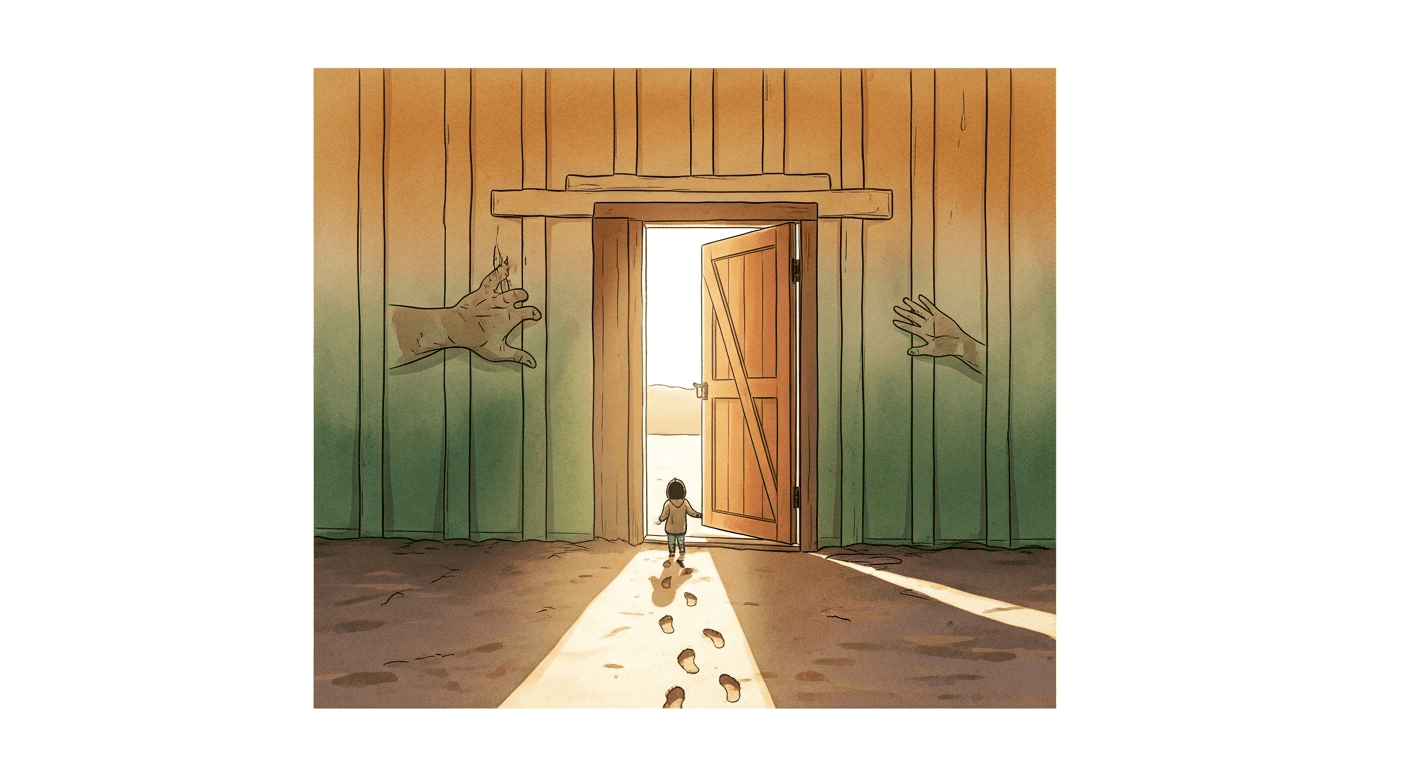
The federal government just committed $6 billion to skilled trades training across Canada. Manitoba colleges say they don’t have the seats.
On April 29, Prime Minister Carney announced Team Canada Strong — a five-year plan to recruit up to 100,000 Red Seal trades workers. The centrepiece: paid entry-level placements for youth aged 15 to 30, a $5,000 certification bonus, and $400 per week during in-class training. Canada will need 1.4 million additional trades workers by 2033, according to federal projections. Without action, the country faces a persistent shortage of more than 20,000 skilled workers every year. Youth unemployment has been rising, and the spring economic update positioned this as the marquee response.
For the roughly 625 young people who age out of Manitoba’s child welfare system every year (Manitoba Government via CBC, 2023) — 91 per cent of them First Nations, Métis, or Inuit — a funded career pathway could be the difference between stability and crisis. Skilled trades training for First Nations, Métis, or Inuit youth in Manitoba has been identified as a critical gap by researchers, advocates, and the young people themselves. The money is now on the table. But so is a problem Ottawa didn’t account for.
Consider what $400 per week during in-class training means for someone who aged out of care last month with no savings and no family to fall back on. It means rent. It means groceries. It means the difference between completing a certificate and dropping out because you can’t eat. That’s the promise of Team Canada Strong. Whether Manitoba can deliver on it is another question.
Youth navigating this transition are often the ones who stand to gain most from programs like these, and lose most when the infrastructure falls short. For anyone starting that journey, understanding who qualifies for transitional support is a practical first step.
$6 Billion for Trades. Zero New Classrooms.
Within days of the announcement, Manitoba’s post-secondary institutions told CBC that the plan won’t work without capacity expansion. Waitlists already exist for electrical, plumbing, HVAC, welding, and carpentry programs across the province. The incentives are welcome. The classrooms aren’t there.
The numbers tell the same story. Manitoba apprenticeship registrations dropped to 2,730 in the fiscal year ending March 2025 — down 14.5 per cent from 3,128 the previous year. That’s not a recruitment problem. That’s a training system contracting at the worst possible time.
Making it worse: RRC Polytech, Manitoba’s largest polytechnic and the primary pipeline for trades training in Winnipeg, is closing programs — some permanently — to remain financially sustainable. The federal government is scaling up ambition. Manitoba’s training infrastructure is scaling down capacity. Those two curves are heading in opposite directions.
The spring economic update does include targeted investments — $601 million for culturally relevant First Nations education on reserve, a Reserve Trades Experience Pilot offering fully funded training with paid work on infrastructure projects, and $307.9 million for the Youth Employment and Skills Strategy serving 20,000 youth facing barriers. These pieces matter. But they don’t build welding bays at RRC Polytech or hire instructors for oversubscribed electrical programs.
What the Waitlist Actually Costs
Waitlists don’t just delay careers. For youth aging out of care — who lose all financial supports at 21 — a six-month waitlist can mean six months without income, without structure, and without the stability that keeps someone housed. No EI. No savings. No parents to move back in with. That’s the window where the system fails people. And it’s exactly the window Team Canada Strong is supposed to close.
A Conference Board of Canada report found that failing to invest in education, employment, and mental health supports for First Nations and Métis youth aging out of care could cost the Canadian economy between $2 billion and $5.5 billion over five years. The flip side is just as striking: strengthening those supports could increase their total lifetime income by $1.1 billion. Those are national figures. In a province where 91 per cent of children in care are First Nations, Métis, or Inuit, the per-capita impact is concentrated in communities that have been underserved for generations.
In Winnipeg, the stakes are visible on the street. As of March 2026, 8,248 people were experiencing homelessness — up from 5,698 a year earlier — and approximately 80 per cent are First Nations, Métis, or Inuit. Among them, 4,468 are chronically homeless. One hundred and four people were added to the count in March alone.
Research from the Canadian Child Welfare Research Portal has documented the pattern: youth aging out of foster care lose all financial and social supports at the age of majority. Without stable housing, pursuing education or employment becomes nearly impossible. Without education or employment, stable housing stays out of reach. First Nations, Métis, and Inuit youth are disproportionately affected at every stage of this cycle.
Housing, training, employment — these aren’t separate policy problems. They’re the same problem experienced in sequence. A young person can’t hold a training seat without stable housing, and can’t afford stable housing without income. The $400-per-week in-class support in Team Canada Strong addresses part of this. But only if there’s a seat available. Social workers and CFS staff connecting youth to these pathways can review the referral process for case-specific support.
What Would Actually Close the Gap
Team Canada Strong isn’t a bad plan. It’s a plan that assumes provincial infrastructure the provinces haven’t built.
The most promising piece for First Nations and Métis communities may be the Reserve Trades Experience Pilot — fully funded training paired with paid work on infrastructure projects. That model addresses two barriers at once: it eliminates the cost of training and provides income during it. For youth who’ve aged out of care with no financial safety net, that distinction is everything.
Organizations like Skills Manitoba and First Peoples Development Inc. are already building trades pathways for First Nations, Métis, or Inuit youth in Winnipeg. Locally, programs that combine employment readiness with life skills — budgeting, cooking, daily routines — lay the groundwork that makes a trades application possible in the first place. What the sector needs isn’t another recruitment campaign. It’s capacity — more seats, more instructors, more shops. The federal money could get there, but it will take provincial cooperation and institutional willingness to expand at the exact moment Manitoba’s largest training provider is doing the opposite.
The gap between announcement and implementation is where policy meets people. Youth who’ve spoken about their experience aging out of Manitoba’s care system have been consistent about what they need: not more promises, but programs they can actually walk into on a Monday morning.
$6 billion is a real number. So is the waitlist at RRC Polytech. For First Nations and Métis youth aging out of Manitoba’s child welfare system, the question has never been whether they want to work — it’s whether the system can meet them where they are. Programs like New Steps work in that space — connecting young people to employment readiness, foundational skills, and the stability that makes a training seat mean something. If you or someone you know is navigating this transition, reach out.