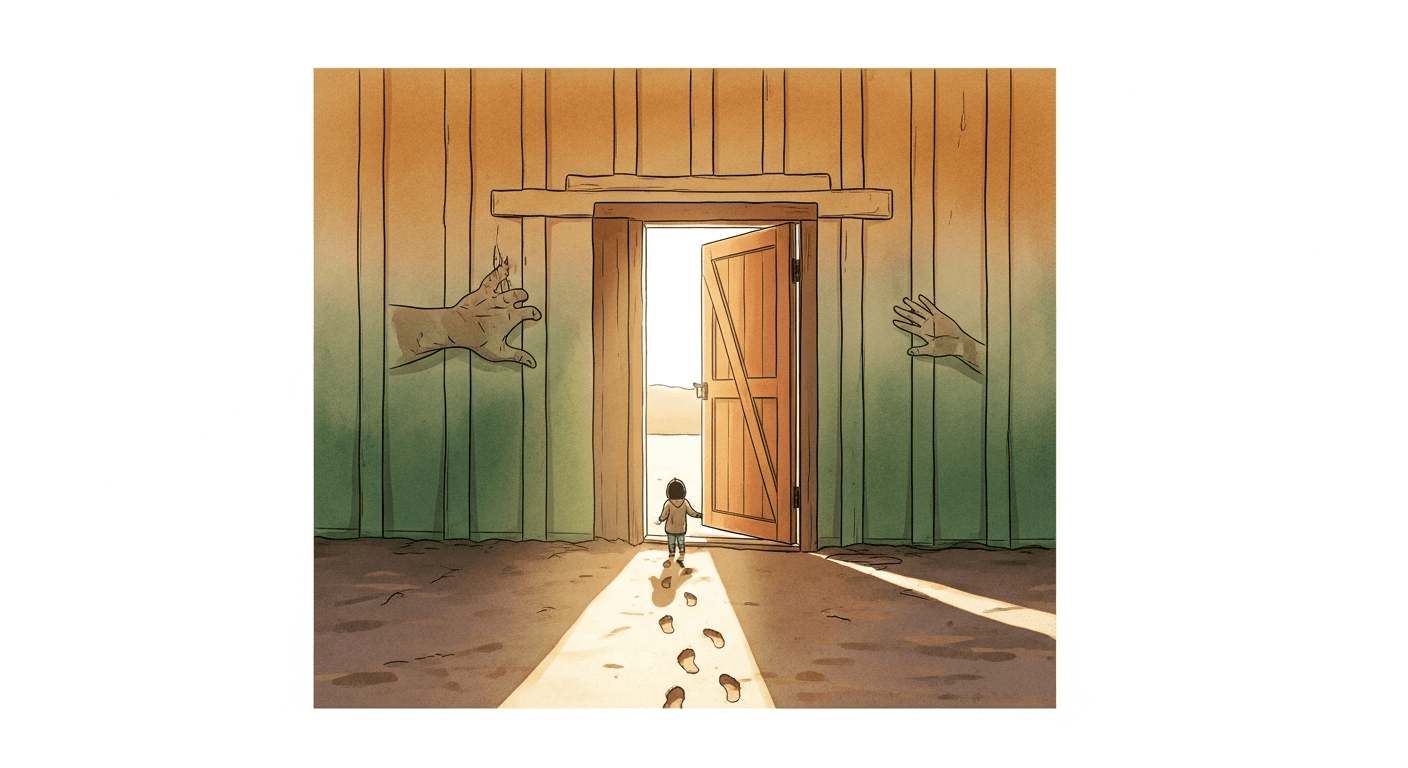
Fifteen First Nations now run their own child welfare systems under Bill C-92. It is the most significant transfer of authority since the legislation took effect in 2020 — backed by $700 million in new federal funding and 45 more nations waiting in the pipeline. But a growing dispute in one Manitoba First Nation is exposing a design flaw that nobody fixed: when jurisdiction transfers, what happens to oversight?
The answer, it turns out, is nothing. And as Manitoba prepares for a province-wide transfer of child welfare authority to First Nations, that gap is becoming impossible to ignore.
How C-92 Is Reshaping First Nations and Métis Child Welfare
Since C-92 opened the door for First Nations and Métis communities to exercise jurisdiction over their own children and families, the pace of change has been striking. According to Indigenous Services Canada, 15 coordination agreements have been signed — 13 trilateral, between First Nations, provinces, and the federal government, plus two bilateral — with 14 First Nations and Métis child welfare laws now in force. Another 45 nations have drafted their own laws and are waiting for coordination agreements, while $283 million has been allocated for capacity-building across 259 First Nations groups exploring the process.
In the Spring 2026 Economic Update, Ottawa committed $700 million over six years to fund child welfare services delivered under C-92 — the largest single investment in the legislation’s history, part of a broader $4.3 billion commitment to Indigenous services.
The urgency behind these numbers is hard to overstate. Statistics Canada data shows First Nations, Métis, or Inuit children make up 53.7 percent of all foster children in Canada despite representing just 7.6 percent of the child population. First Nations children enter care at a rate of 41.8 per 1,000 — compared to 2.3 per 1,000 for non-First Nations, Métis, or Inuit children. That is an 18-to-one ratio, and the driving force behind a decades-long push for Indigenous-led child welfare.
C-92, formally titled An Act respecting First Nations, Inuit and Métis children, youth and families, was designed to change that. It affirms the inherent right of First Nations to exercise jurisdiction over child and family services and establishes national principles including the best interests of the child, cultural continuity, and substantive equality. For communities that have watched generations of children removed and placed far from home, the legislation represents a chance to bring the system itself under community control.
For youth and families navigating the current system in Manitoba, understanding your rights matters now more than ever. A guide to youth rights in care walks through what you are entitled to — regardless of which body holds jurisdiction.
But jurisdiction is one thing. Accountability is another. And one community’s experience is raising questions the federal framework never answered.
What Happened in Peguis — and Why It Matters
Peguis First Nation, about 150 kilometres north of Winnipeg on Treaty 1 Territory, became the first community in Manitoba to sign a C-92 coordination agreement in 2023, backed by a $319 million federal commitment over ten years. It was held up as proof the legislation could work — a landmark that other Manitoba First Nations could follow.
What happened next depends on who you ask.
The Peguis CFS agency reports an 80 percent drop in children coming into care since taking jurisdiction. Of 222 children currently in the system, 99 percent live with family members rather than in foster placements. According to CBC News, the former chief and the agency point to those numbers as evidence the system is working — fewer children removed, more families kept together.
But Peguis Chief Glenn Hudson has called the agreement a failure. Families report being turned away from services. The chief says there is no proper oversight, no independent review process, and no external body with authority to investigate complaints.
Here is what is not in dispute: the Manitoba Advocate for Children and Youth — the provincial watchdog that investigates when things go wrong in child welfare — lost jurisdiction over Peguis children the moment the First Nation exercised its C-92 authority. Families who would normally call that office were told there is no independent body with jurisdiction to hear their concerns.
When authority transferred, oversight did not transfer with it.
A Gap That Was Flagged Before It Opened
The accountability gap was identified before the first coordination agreement was ever signed. The Yellowhead Institute’s comprehensive review of C-92 identified five problem areas — national standards, jurisdiction, funding, accountability, and data collection — and offered 21 implementation strategies. Accountability was already on the list in 2019, when the legislation was still new.
In 2024, researchers Cindy Blackstock and Nico Trocmé went further. Writing in Policy Options, they warned that two legal and policy issues carry "significant risk of setting up First Nations and Métis communities for failure" — inadequate long-term funding and unclear accountability structures. A 2025 peer-reviewed study in Canadian Public Administration reached the same conclusion: limited mechanisms for accountability and transparency remain a central challenge in C-92 implementation.
Three separate analyses, spanning six years. The same finding. And still no federal framework for independent oversight of child welfare services delivered under the act.
Social workers and CFS professionals navigating Manitoba’s evolving child welfare landscape can review the professionals referral page for current pathways and case-specific support options as jurisdiction continues to shift.
What Comes Next — and Who It Affects
Now multiply Peguis by 45. That is how many nations have laws drafted and coordination agreements pending across Canada. In Manitoba specifically, the provincial government signed a historic declaration in May 2024 committing to transfer child welfare jurisdiction to First Nations across the province. It was signed in Winnipeg by the premier and First Nation chiefs. The oversight framework for that province-wide transfer remains undefined.
For the roughly 625 young people who age out of Manitoba’s child welfare system each year (Manitoba Government via CBC, 2023) — the vast majority of them First Nations, Métis, or Inuit — the question of who is accountable is not abstract. It determines who they call when a placement breaks down. Who investigates when services they were promised never arrive. Who ensures the supports they are legally entitled to actually reach them. For those unfamiliar with how CFS works in Manitoba, the system is already layered and complex — and these jurisdictional shifts add dimensions that directly affect extensions of care and transition planning.
Self-determination in child welfare is not the problem. It is the solution to a system that has separated First Nations and Métis families at rates that are, by any measure, a national failure. But self-determination without independent accountability is not full sovereignty — it is a gap. And gaps are where young people slip through the cracks.
The $700 million in new federal funding creates a real opportunity to build the oversight infrastructure that should have existed from the start — First Nations-designed, community-accountable, and independent enough to earn the trust of the families it is meant to protect. Until that infrastructure is in place, programs like New Steps exist to make sure young people navigating Manitoba’s child welfare system don’t face the transition alone. If you or someone you know needs support, start a conversation.